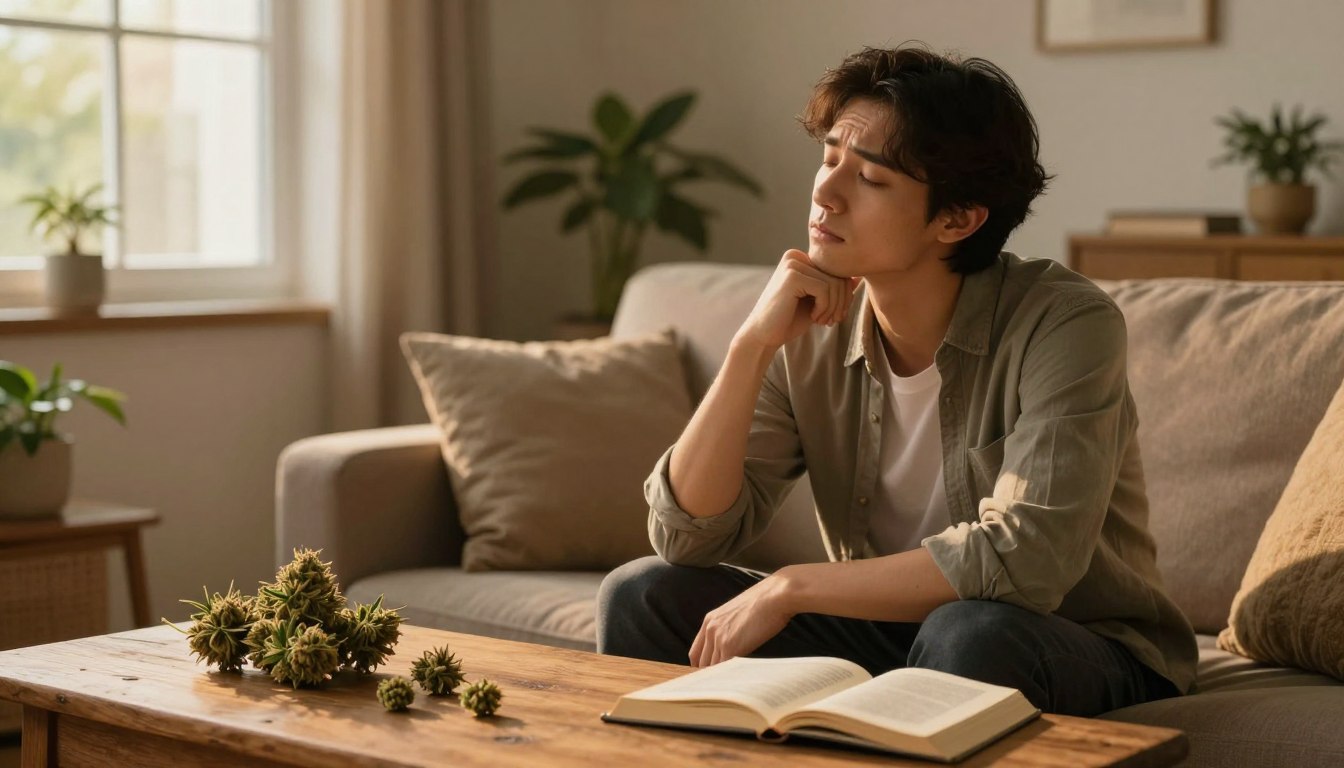
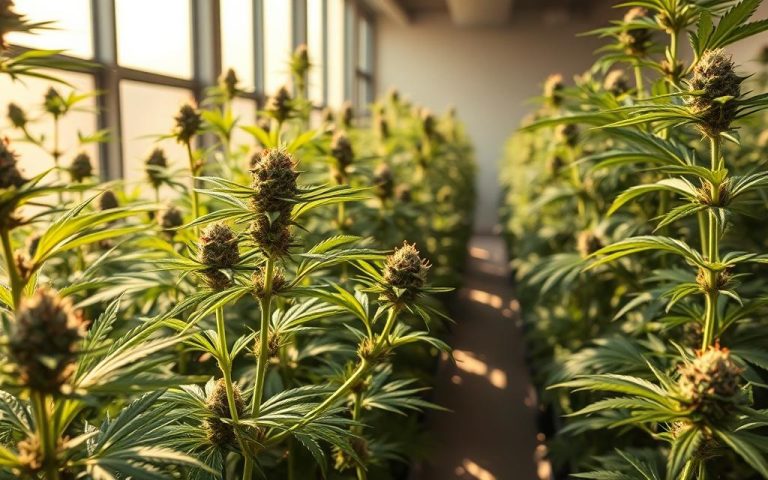
CBD flower may appeal to people seeking relaxation without the intoxicating effects associated with THC, but its benefits are not guaranteed. If you are weighing hemp products for stress, anxiety, pain, or sleep, it helps to separate personal reports from established medical evidence.
This guide explains what the dried buds contain, what effects you may experience, and how to weigh quality, safety, and legality. The cannabis plant contains many compounds, and products can differ in their cannabinoid levels. A label or appealing strain name alone does not tell you what a product will do.
Some people describe feeling calmer or more settled, but that response is not a proven treatment for a health condition. Your health history, other medicines, and product contents all matter when considering possible benefits.
Key Takeaways
CBD flower may feel relaxing, but relief from anxiety, pain, or sleep problems is not guaranteed.
CBD and THC are different cannabis compounds, and THC can cause intoxication.
A product-specific certificate of analysis can help you check cannabinoid content and contaminant screening.
Smoking flower has respiratory trade-offs, and CBD may interact with some medicines.
Federal and local rules can change, so the product and location both matter.
Treat any possible benefit as a reason to learn more, not as a reason to delay care for a health concern.
What Is CBD Flower, and How Is It Different From THC?
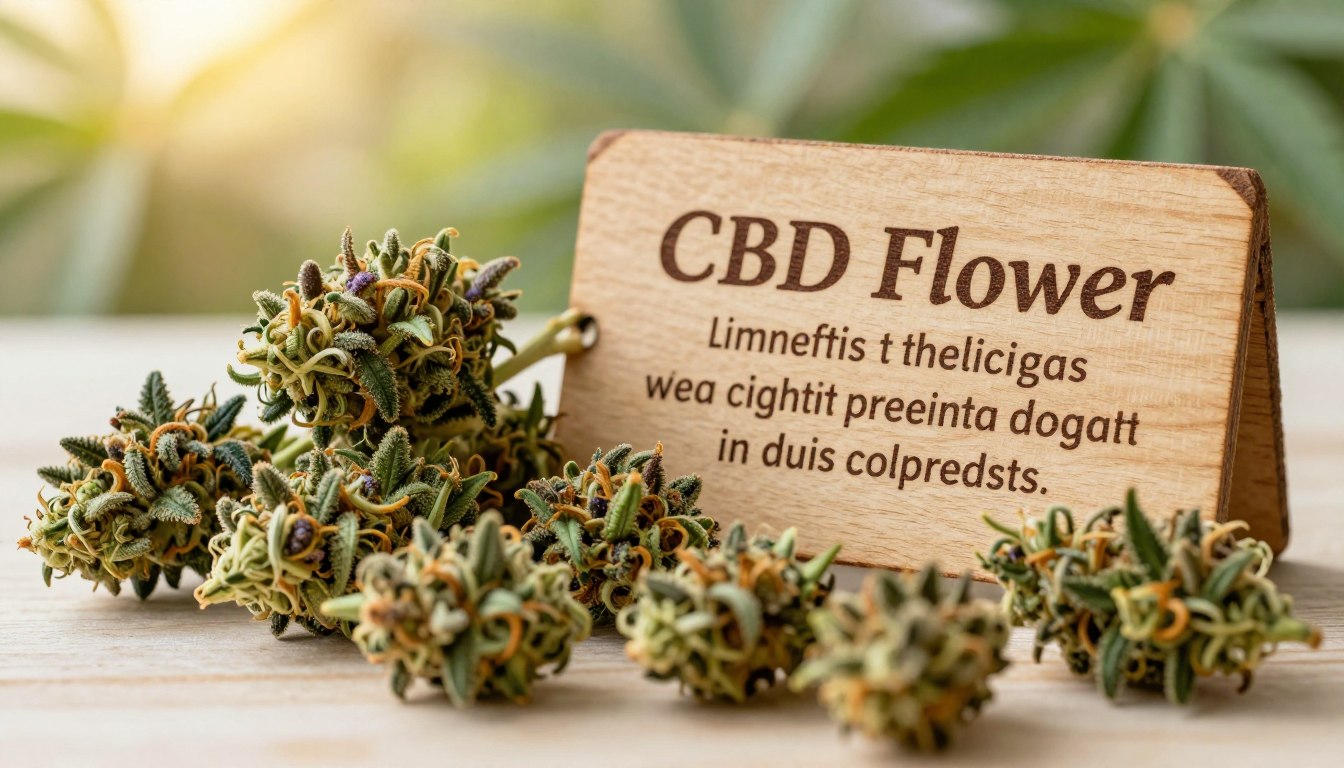
CBD flower is made from dried hemp buds, and its appearance alone cannot tell you how much CBD or THC it contains. Hemp is a variety of Cannabis sativa, while THC is the cannabinoid chiefly associated with intoxication.
CBD is one of hundreds of components in cannabis, but CBD does not cause a high by itself. CBD and THC are distinct cannabinoids with different effects. Hemp buds may still contain THC, and their color or smell cannot confirm the amount.
Nonprescription CBD flower is not an FDA-approved medicine.
CBD is a compound, not the same thing as a prescription drug. Epidiolex is a prescription CBD drug approved for certain seizure disorders and seizures associated with tuberous sclerosis complex.
That distinction answers whether CBD is a drug: CBD itself is a compound, while a regulated medicine contains CBD as an active ingredient and has an approved use. CBD flowers sold without a prescription do not have that approval.
Hemp and marijuana can look and smell similar, even when their cannabinoid profiles differ. Sellers may also use names that sound precise without showing the actual contents. Read the cannabinoid label rather than relying on a bud’s color, smell, or name.
How Does CBD Flower Affect the Body?
CBD may influence the body’s signaling systems, but it does not produce one reliable feeling in everyone. Reported effects include calm, alertness, or drowsiness, and none is predictable for every person.
The endocannabinoid system (ECS) is the body’s cell-signaling network that helps regulate functions such as pain perception, mood, and sleep. CBD may influence ECS signaling without directly binding to CB1 and CB2 receptors. How CBD affects the brain is still being studied.
The ECS helps regulate a range of everyday functions:
Pain perception
Mood
Sleep
Appetite
How CBD makes you feel can depend on your individual response and the product. Some people may experience calm, while others notice no clear change or feel sleepy. These are personal reports, not guaranteed effects CBD will produce in you.
CBD effects on the brain remain an area of study. Current uncertainty does not support claims that CBD flower protects the brain or prevents a particular condition. A reported feeling is not proof of a lasting health effect.
A calm or sleepy response is possible, so try a new product only when you can observe how it affects you.
CBD Flower Benefits for Anxiety, Pain, and Sleep
CBD flower may support relaxation for some people, but evidence for anxiety, pain, and sleep is not strong enough to promise relief. Possible effects are not the same as proven medical treatment.
People may look to CBD flower benefits when stress feels hard to manage or discomfort disrupts daily life. CBD flower has not been established as a treatment for anxiety, chronic pain, or insomnia. Keep that limit in mind when judging claims about benefits CBD might offer.
Possible Effects on Anxiety and Stress
Some people report feeling more relaxed after using CBD, which could make stress feel less intense in the moment. That experience does not show that CBD flower reliably relieves anxiety or treats an anxiety disorder.
Responses can differ, and a relaxing feeling may not last or address the source of distress. If anxiety interferes with work, relationships, or sleep, a clinician can help you consider established care rather than relying on an uncertain effect.
What Is Known About Pain and Inflammation
CBD may have properties that researchers are studying for pain and inflammation, but a possibility is not proof of benefit. Evidence does not establish CBD flower as a treatment for chronic pain or inflammatory disease.
Pain has many causes, and persistent or worsening pain deserves medical evaluation. CBD benefits reported by one person cannot show that the same product will help another person’s condition.
Sleep Support and Its Limits
Relaxation may help some people settle down before bed, but this does not establish CBD flower as an insomnia treatment. Sleep problems can also reflect health conditions, medicines, stress, or habits that CBD does not address.
CBD benefits for women have not been shown here to form a distinct category, so gender-specific promises should be treated cautiously. Epidiolex is an FDA-approved CBD drug for certain seizure disorders and seizures associated with tuberous sclerosis complex; that approval does not show that flower treats the same conditions.
Do not replace a prescribed treatment with CBD flower without discussing the change with your clinician.
How Strong Is the Evidence for Anxiety and Sleep?
Evidence for cannabinoid effects on anxiety and sleep is promising in some studies but too mixed to set a dependable expectation for CBD flower. A positive signal is worth studying, not a guarantee of relief.
A 2025 scoping review included 29 studies of cannabinoids for anxiety and sleep disturbances. About 45% reported positive effects on both outcomes. Those results covered different cannabinoids and doses, not CBD flower alone.
The review’s findings cannot show that a particular hemp flower will have the same effect. A study might examine a different cannabinoid, product, or dose, so its result may not apply to what you use.
The studies also differed in design and methods. Few provided standardized dosing protocols or effect sizes, which makes it hard to compare how much participants took or how large a change they experienced.
Without consistent doses and measures, a reported improvement cannot identify a dependable amount to use. A positive result in one study may reflect its specific participants, product, or research setup.
That matters when you see broad claims about cannabinoids. A percentage of studies reporting positive outcomes does not tell you the odds that you personally will feel better, or whether an outcome lasted.
Nor does a favorable signal establish a treatment recommendation. There is no reliable dose or product choice that follows from those mixed findings for CBD flower.
Treat a reported benefit as preliminary unless the product, dose, and outcome are clearly comparable to your situation.
How Do Smoking, Vaping, and Edibles Compare?
Inhaled CBD can act within minutes, while an edible may take 45-120 minutes to produce effects. Route matters because the body absorbs CBD differently through the lungs, mouth, or digestive system.
Smoking flower reaches peak bloodstream concentration in about 3 minutes. Inhaled effects tend to begin quickly and wear off sooner than effects from edibles. The table gives typical estimates, not a promise about your response.
Route
Typical onset
Typical duration
Bioavailability
Combustion
Smoking flower
About 3 minutes
1-2 hours
10-50%
Yes
Vaping CBD
3-5 minutes
1-2 hours
34-56%
Depends on device
Sublingual tincture
15-45 minutes
2-4 hours
13-19%
No
Edibles
45-120 minutes
4-8 hours
5-19%
No
Bioavailability means the share of a substance that reaches the bloodstream. These estimates vary across products and people, so they are not a way to calculate a personal amount.
Edibles take longer to act because the digestive system processes them, and their effects may last longer. That delay can make it harder to judge the result quickly, especially if someone uses more before the first effects appear.
Vaping avoids burning plant material in some devices, though whether combustion occurs depends on the device. Smoking creates smoke and has respiratory trade-offs that do not apply in the same way to tinctures or edibles.
These route estimates are not a dose recommendation. Choose a route based on onset and duration as well as the health trade-offs, not speed alone.
Can CBD Flower Get You High or Trigger a Drug Test?
Most CBD flower is not expected to cause a high, but a high-THCa product can become intoxicating when smoked. THCa converts to delta-9 THC when heated.
The federal hemp definition uses no more than 0.3% delta-9 THC by dry weight. That figure does not rule out high THCa or other THC exposure. Standard drug tests cannot distinguish hemp-derived THC from marijuana-derived THC.
Flower type
Likely result when smoked
Drug-test concern
CBD flower with low THC
Not expected to cause a high
May expose you to THC
THCa-rich flower
THCa converts to intoxicating delta-9 THC
Can lead to a positive test
THC-rich marijuana
Intoxicating
Can lead to a positive test
A hemp label or compliant delta-9 figure does not show the full cannabinoid profile. A product can have high THCa even when its delta-9 THC figure appears low, so smoking it may lead to intoxicating effects.
Drug-test results can matter for employment, legal requirements, or other obligations. If a drug test matters to you, avoid products that contain THC or whose total cannabinoid profile you cannot verify.
What Should You Check Before Buying CBD Flower?
A clear, batch-matched COA is more useful than a high-CBD claim printed on a package. Product-specific testing can help you assess cannabinoid content and contaminant screening.
A certificate of analysis (COA) is a lab report documenting what a product contains. Check that the COA matches the exact batch you are considering. A report for another batch may not describe the flowers in your package.
Read the Certificate of Analysis
In a U.S. investigation of 75 cannabis products, 25% underlabeled and 60% overlabeled cannabinoid content. Those results show why a printed concentration alone may not be a reliable measure of the contents.
Use this checklist when reviewing a COA:
Match the COA batch to the product.
Check CBD and total THC results.
Review pesticide screening.
Review heavy-metal screening.
Check hemp origin and drying or trimming information.
Look for current results tied to the product, rather than a general report that covers a brand or strain. The FDA has found that some CBD products do not contain the CBD levels stated on their labels.
Check Growing and Processing Information
Growing and processing details can help you judge whether the seller explains how the flowers were handled. Look for stated hemp origin and information about drying or trimming, not just a colorful strain description.
The FDA is investigating reports of unsafe levels of pesticides, heavy metals, and THC in CBD products. A COA can help you check screening results, but a missing or unrelated report leaves important questions unanswered.
Do not buy based on a strain name or appearance when the cannabinoid profile and testing cannot be verified.
Is CBD Flower Legal in the U.S.?
In the United States, the federal timeline for hemp-derived THC products changed in 2026, so a hemp label alone does not settle legality. Federal rules and state or local restrictions may differ.
A funding law signed September 2, 2026, postponed scheduled federal restrictions on hemp-derived THC products. The restrictions were moved from November 12 to December 11, 2026.
Date
Federal action
September 2, 2026
Funding law signed; restrictions postponed
November 12, 2026
Original scheduled date
December 11, 2026
Postponed restriction date
The scheduled federal hemp-THC restrictions include a 0.4-milligram total-THC-per-container limit. That threshold has been described as covering most full-spectrum CBD products.
A federal delay does not guarantee that a product is legal in every state or locality. State rules may treat CBD flowers, hemp-derived THC, or cannabis products differently, and local rules can add limits.
Legality can depend on the product’s cannabinoid content and where you possess it. Check current federal, state, and local rules for the product and place where you plan to possess it.
What Are CBD Flower’s Side Effects and Medication Risks?
CBD can cause side effects and change how some medicines are processed, so a product’s natural origin does not make it risk-free. Individual responses can differ, and unapproved products have not been evaluated by the FDA for every safety concern.
The FDA has not evaluated unapproved CBD products for effectiveness, appropriate dosage, drug or food interactions, dangerous side effects, or other safety concerns. Ask a clinician or pharmacist about your own medicines before use.
Possible Side Effects
Reported effects include fatigue or drowsiness, diarrhea, and changes in appetite or weight. These effects are not harmless for everyone, especially if sleepiness affects work, balance, or daily tasks.
Smoking CBD has respiratory risks because inhaling smoke can affect the lungs. The absence of nicotine in hemp flower does not remove the risks of breathing smoke into your airways.
Medication Interactions and Medical Care
CBD can inhibit liver enzymes CYP3A4 and CYP2D6, which help process many medicines. That effect may change how some medicines work or how long they remain in your body.
Ask a clinician or pharmacist to review these medicines before combining them with CBD:
Blood thinners
Anti-seizure medicines
Immunosuppressants
Sedatives
The FDA warns that unproven or misleading CBD medical claims may lead people to delay diagnosis, treatment, or supportive care. It recommends discussing treatment options with a doctor, especially when CBD is being considered for a health condition.
Ask a doctor or pharmacist to review your medicines before adding CBD, especially if you take a prescription drug.
How Can You Use CBD Flower More Safely?
A cautious trial means starting with a small amount and giving yourself time to notice the response before using more. Slow observation is more useful than assuming every product or person responds the same way.
There is no universal dose established for CBD flower. A clinician can help assess personal risks, including health conditions and other medicines, without treating flower as a proven therapy.
Start Cautiously and Track Your Response
Keep the trial simple and write down what you used and how you felt. Stop use and seek advice if you notice effects that concern you.
Begin with a small amount.
Wait and observe before using more.
Record the product and your response.
Stop use and seek advice if concerning effects occur.
Reduce Risks From Inhalation
Smoking burns plant material and exposes your lungs to combustion byproducts. Hemp flower does not contain nicotine, but that does not make smoke safe to inhale.
Burning plant material exposes your lungs to carbon monoxide, tar, and particulates. Hemp flower’s lack of nicotine does not make smoke safe.
People with respiratory conditions should avoid smoking and discuss alternatives with a clinician. A non-inhaled option may avoid smoke exposure, though it can still carry CBD-related risks and may act differently.
If you feel sleepy, dizzy, or less alert, do not drive or operate machinery. Avoid driving or operating machinery if CBD leaves you sleepy, dizzy, or less alert.
Conclusion
CBD flower may be worth considering for some adults, but a possible benefit is not a substitute for reliable care. You may feel relaxed, but the response is not guaranteed, and the product’s actual contents matter.
If you are considering it, review a product-specific COA and discuss CBD with a healthcare professional, especially if you take medication or seek treatment for a condition. Before trying it, check the COA and ask a healthcare professional whether CBD fits your health needs.
FAQ
Is CBD hard on the liver or kidneys?
CBD can affect liver-enzyme activity and the way some medicines are processed, so review it with a clinician, especially if you take prescriptions. That does not mean CBD causes the same effect in everyone. There is not a general kidney effect to assume from CBD use. Your dose, health history, and medicines matter when assessing personal risk.
How long does CBD stay in your system?
CBD may remain detectable for several days, though the timing varies with how much you use and how often. CBD itself is different from THC, which can affect a drug-test result. Some CBD products contain THC, even when marketed as hemp-derived. If testing matters, the product’s cannabinoid contents and your pattern of use are important considerations.
What should you not mix CBD with?
Review blood thinners, anti-seizure medicines, immunosuppressants, and sedatives with a clinician or pharmacist before combining them with CBD. CBD can affect liver enzymes that help process medicines, which may change their levels or effects. Do not stop a prescription or adjust its dose on your own. Bring the product label and your medication list to the discussion.
Is CBD harder on the liver than alcohol?
There is no simple risk ranking that applies to everyone. CBD can affect liver enzymes, and high doses can alter liver-related test results. Alcohol has its own health risks, so comparing the two does not establish that CBD is safer for you. Discuss CBD use with a clinician, particularly if you have liver concerns or take medicines.
What organ does CBD affect?
The liver is important for processing CBD and some medicines, but CBD may affect functions across the body. Liver-enzyme changes can influence how certain drugs are broken down. That does not mean the liver is the only organ involved in CBD’s effects. Your health conditions and medication list can help a clinician assess what matters in your case.
Can I replace alcohol with CBD?
CBD is not an established treatment for alcohol use and is not a guaranteed substitute for drinking. It may affect people differently, and products can contain THC or interact with medicines. If you are concerned about how much you drink or want to stop, talk with a healthcare professional. They can help you consider safer, evidence-based support.
Does CBD help fatty liver?
CBD is not an established treatment for fatty liver and should not replace medical evaluation or care. Fatty liver can have different causes and may need monitoring or specific changes guided by a clinician. CBD can also affect liver enzymes and medication processing. Discuss any CBD product with your healthcare professional rather than using it to treat liver disease.
The hemp world is buzzing with a new trend: CBD CBG flower. These flowers come from cannabis plants bred for higher CBD and CBG levels. As people get more interested in cannabinoids, they explore these flowers for their benefits. CBD and CBG don’t make you feel high. This makes them great for those wanting wellness…
Indiana’s CBD flower laws are complex and ever-changing. Since 2014, the state has crafted a careful framework for CBD products. This balances consumer access with strict legal guidelines. Indiana’s CBD flower legality stems from key legislative milestones. The 2018 Farm Bill paved the way for hemp-derived products nationwide. Indiana followed suit with targeted state legislation….
Traveling with hemp-derived products, such as CBD flower, can be tricky. Despite the 2018 Farm Bill legalizing hemp with less than 0.3% THC, confusion often arises at security checkpoints. The TSA’s primary focus is on security, not drug enforcement, which means even legal items might be flagged. CBD flower closely resembles marijuana in appearance and…
Since 2018, when the Farm Bill passed, interest in CBD hemp flower surged. Now, wellness fans and recreational users both love it. This supplement is not only safe to use but also packed with health benefits. People looking for natural health options are turning to CBD hemp flower. You can smoke it for quick effects,…
High CBD, low THC flower is gaining popularity for its health benefits. It offers a non-psychoactive alternative to traditional cannabis. People use it for relief from chronic pain, anxiety, and sleep issues. Studies show a shift in cannabis potency from 1995 to 2014, with THC levels rising and CBD levels falling. This change highlights a…
For thousands of years, people have recognised CBD’s therapeutic properties. Its history goes back 12,000 years to Central Asia. Now, pure CBD flower stands out in the wellness market, thanks to its natural benefits. It is known for its ability to relieve pain and reduce anxiety without causing a high. Such qualities come with the…